


Hakomi - Mindful Somatic Psychotherapy
- Jamille Perryman
- Sep 10, 2025
- 5 min read
Updated: Sep 14, 2025
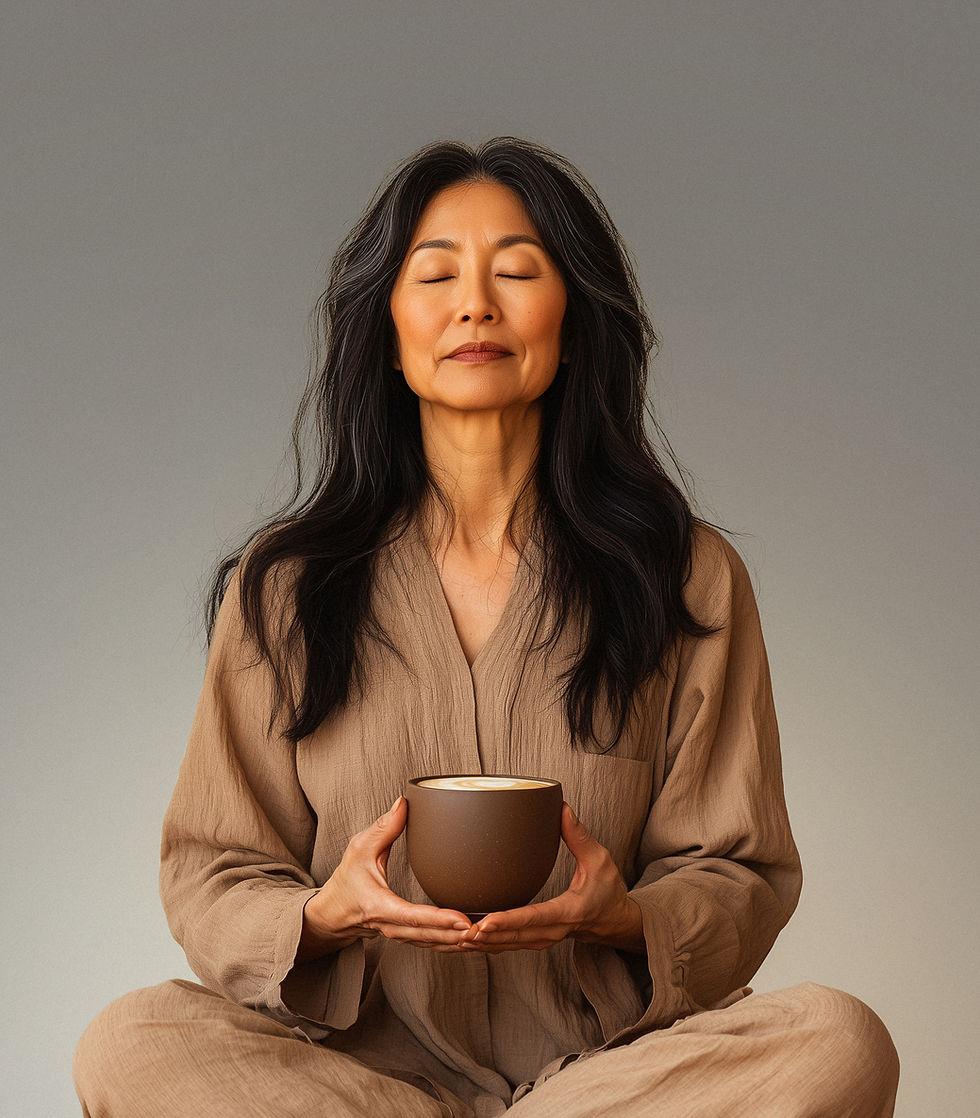
Hakomi is mindful somatic psychotherapy. It was created by Ron Kurtz in 1977 and continued to evolve into the 80s. Kurtz was not a therapist, but rather, studied English and physics during his undergraduate years, worked in computer electronics, and then was highly resonant with Gestalt Therapy as he got his doctorate in experimental psychology. Outside of academia, Kurtz learned from Feldenkrais, Bioenergetics, and Eastern philosophies of Taoism and Yoga. An aside here on yoga and Buddhism, from which yoga is derived. Both yoga and Buddhism are maps for awakening, rather than a religion and a form of exercise, respectively. I mention all of this because it was from his lived experience that this brilliant fusion of therapy was birthed.
Kurtz was collaborating with trusted friends and colleagues during the formal founding of Hakomi. One of his friends had a dream where he handed a piece of paper to Ron that said the word “Hakomi” on it.
Hakomi is actually a Hopi word that translates as a question:
“Where do you stand in relation to these many realms?”
It is a greeting that asks,
“Who are you?”
I understand the many realms to be the systems that shape us: family, culture, society, and global systems. Hakomi inquires into core material and revolves around central themes of being a human: safety and belonging; support, love, and appreciation; freedom and responsibility; belonging; and authenticity.
Our thoughts, emotions, sensations, all of the autopilot stuff of behavior and how we react, is simply coming from the unconscious. Unconsciously held wounding in one or more of these above core developmental areas. Because core material is tender and when we access it our susceptible to vulnerability, Hakomi has five principles guiding the practitioner and the work: mindfulness, nonviolence, mind-body holism, unity, and organicity. All of these principles wrapped in loving presence. Loving presence is a word that Ron Kurtz made-up from a mix between love and kindness from Buddhism and non-judgmental therapeutic presence from traditional western psychotherapy. Kurtz identified Hakomi as assisted self-study or mindfulness based assisted self-discovery.
Let's break it down…mindful somatic psychotherapy.
Mindfulness: mindfulness is simply paying attention to the present moment, usually without judgment the present moment can include thoughts, memories, emotions, or bodily sensations. This may seem like such a simple definition, and even a simple task, yet our brains are meaning making machines and whatever comes into awareness has the potential to develop into a story.
Somatic: Somatic from the Greek, soma for the body. Since this is a body based therapy, the primary attention will be on the body and bodily sensations. This felt sense can be difficult to concentrate on when the eyes are open and the focus is outward… especially in the beginning of cultivating body awareness, from the inside out.
Psychotherapy: psychotherapy or simply therapy is what counseling is. Some say therapy is all about making the unconscious conscious. I believe that. During the conversations in session, the focus is on you, the client. This report gained during “talk therapy” is important because we cannot go inward if there is not enough safety in the outer environment. That means you have to have a certain level of trust in the therapeutic alliance.

What can I expect in a Hakomi session?
And in the course of sharing concerns and challenges with me in session, I will either pick up on something that is highly energetically charged, or you will hit something that has a Zing to it. I will invite you to slow down and get mindful with me. It can be helpful as our attention draws inward to gently close down the eyes, but you never have to… you can keep them softly opened. Regardless, the concentration is inside. We will land each in our own bodies, connecting with our body and breath for a moment or two. Then I will ask you to bring to mind the topic of what caused us to slow down or I might give a summary of everything you have brought into session on that day. I will ask you to be mindful… to just notice any thoughts, emotions, our bodily sensations, without judgment…(oftentimes, there is some judgment from a critical” part” and in this I will deviate from Hakomi proper and dive into parts work of internal family systems (IFS). I will continue to ask about sensations. It's OK for thoughts to be present, just know that we will always come back to the body… even if multiple parts are present. In fact, very young parts, those that formed before speech developed, are primarily if not exclusively somatically expressed. This inner noticing utilizes interoceptive awareness. With trauma, our awareness leaves the body, so in the beginning of developing interoception you may not notice so much, and as time progresses and we cultivate this skill, more and more is revealed. We go at the speed of safety. You have an inner knowing of your own healing rhythm. I will always honor this rhythm. We all have protective parts that do their best to keep us from getting triggered. In therapy, however, it is about butting up to those boundaries, getting activated just a little and within your window of tolerance, what you have capacity for, to then respond in a different way, with support.
Hakomi my personal journey
I entered the two year long hakomi professional skills training program about a year into my counseling graduate program. I really didn't have a good grasp of what this training would entail. I only knew how I felt after I took the 20 hour introductory course over a weekend required for all who were considering the full training before investing time money and effort I knew I wanted to have additional training in a somatic therapy and my choices were Hakomi, somatic experiencing (SE), and sensorimotor. I took the intro class for SE, and although more widely known and developed using neurobiological principles to help the body release trauma, I didn't feel called to it.
During the Hakomi training, there were many experiential's within small group work where we each took turns being the client, the therapist, and an observer. Even though we were encouraged as clients to work with material that might not hit such deep wounds, every experience was profound. I found different parts of myself surfaced, and because we were in a mindful state, I was able to get a little space from them and unblend. So impressed with this modality, halfway through the training, I found my own Hakomi therapist.
There were times in my own therapy after a deep Hakomi session where I would just need to stand on the earth and ground before driving back home. Once there, I might take a nap and then wake up refreshed and feeling so much lighter. In the beginning, there were some pretty heavy layers to work through and lots of tears shed. Even on what my therapist and I call “Hakomi Light” days, the work was significant, although not requiring much of the rest of my day to be altered.
I share this in the spirit of full transparency, because I know I wouldn't want to seek a provider who had not experienced the type of modality or medicine they were administering or providing. Additionally, I want to normalize the deep nature of this work and acclimate you to how these sessions might impact you. Is it worth it? Absolutely.


Comments